The Kindle Addiction

2 Feb

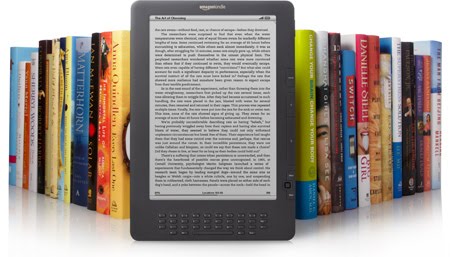
books in kindle

Lovely readers, I know that it is absurdly late for a typical day to be so desperately under-caffeinated as I am, but hey, it’s Sunday, and Sunday isn’t a real day, so you’ll just have to forgive me. Well, you don’t have to. But you get what I mean.

As I sit here on this Sunday morning I MEAN IT’S TOTALLY AFTERNOON AND I DEFINITELY DIDN’T JUST GET UP, sipping my way into my first cup of emotional and ever more physical addiction that is properly composed French-press coffee, I discover another addictive activity that the corporate behemoth that is Amazon has slowly dripped into my life.

Kindle shopping.

Now, I am not a shopper by nature. That genetic (or perhaps epigenetic) quality went to my sister. Growing up, my birthday money was more likely to go into the oddly unbreachable bounds of a plastic piggy bank than into yet another new handbag. Even when it came to “fake” money in the form of gift cards, I more often had to throw them away because they’d expired than because I’d used them all up. (Note: this has since changed in the case of book store and coffee shop gift cards. Bring ’em on.) Shopping? Especially clothes shopping? Terrifying activity. Oh god, the decisions, and the arbitrary evaluations… it’s quite honestly panic attack-inducing. Major ethical decisions? No problem. New wardrobe to replace the one I’d grown out of or worn to bits? Fuck no. Send me and my sister into the same store, and I’ll come out of the dressing room looking like a passably style-informed person. My sister? She’ll come out of the dressing room looking like a fucking super model.

I may have delegated all of my dress and shoe shopping to my sister for a few years back in high school…

But anyhoo. The Kindle. So, I do not like shopping. But I love books. Holding a new book in my hand and opening it up to a virgin page, the words of which I’ve never read before – might as well be shooting up heroine. Hand me a book to have, and you’ll induce some mega-oxytocin-bonding in my view of you for a while. And let’s be clear: I do prefer physical books. The shape, the size, the feel of the cover under your fingertips as you hold it on your lap or against your chest – it’s what makes a book an individual, an entity unto itself. There are memories that get enfolded between the pages, sensations locked into the very book itself. Time and again, I have clutched a book that’s been with me since childhood to my chest and cried while holding it, the same way you clutch onto a friend in a time of needing comfort. And the times that I’ve come across old bindings of books, first print run versions or tombs that have stood on shelves for decades – ooh, there is a magic to the crackle of opening that cover and gazing through the cloud of dust released into the air to the life of old ink within.

So. If you hold out your hands and offer me a physical book and a USB with its .mobi file on it, I’ll choose the physical book, every time.

Buuuuut sometimes I’m not offered that physical book. Sometimes, authors only release certain writing in Kindle form. And sometimes, Amazon’s lovely daily email to me that might as well be titled “oh, you just bought a book from us, so here are five hundred more we know you’ll enjoy funneling all your money to us for” doesn’t feature physical books – it’s about some releases for Kindle.

And those releases for Kindle… there is a seductive gleam to them. As I said, I am not a shopper. I flip out over spending money. But ah, therein lies the magic of Kindle advertisement. Amazon may send me an email about a book that I’d have quite the inner debate over when it would come to buying the physical version of the book – $15? Is this book really worth that? I could spend $15 on another book that I know I’ve been wanting to read. $15 doesn’t seem like a justifiable amount on a book impulse purchase… I should really just save this $15 anyway…

And tack on shipping costs? And the delay while I wait for the book to get here? $15 for a physical book that I don’t know much about becomes an inhibitory high cost to purchase. No new book for Miceala.

Enter Kindle.

What’s that? This book that I’m not so sure about has a Kindle edition? And I could have that book right now? (*cue dilated pupils and heavy breathing of a tempted book-lover*) And the Kindle version is only $5?

kindle buy

Done and done.

Behemoth Amazon really took a step back and figured out what they were doing when it came to creating Kindle. Instant gratification of owning a new book? Check. Reduce price to eliminate deliberation over justification of cost value? Check. Suggest five hundred billion other books you could have right now for less than the normal price of their hardcopy and not require you to re-enter your credit card information and so allow you the time to think about this purchase but rather let you hand us that money with one click and move on to the next morsel of literary goodness? Check, check, and check.

The space efficiency of Kindle is pretty damn attractive, too. I would have loved to have had a Kindle as a kid. I’ve always read pretty damn fast, so one measly book wasn’t going to cut it for a family trip somewhere. No, I needed at least two. Probably three. And then what if I changed my mind and decided I actually wanted to read one of these other two books? Better bring them too. And of course I have to add in this entire shelf, considering it’s my favorite series and is going to give me just as much comfort as bringing along a stuffed animal would have for another child.

And just like that, I’ve filled my two-foot-by-one-foot kiddo roller suitcase with fifty books and two items of clothing. Make that one item of clothing – couldn’t believe I’d forgotten I’d need that space to bring a notebook and pen!

Yeah, this kind of travel packing did not fly with my parents.

The first few times, I managed to get away with it. My parents would make some joke about “what are you bringing, bricks?” as they hauled my suitcase into the trunk of the car, and I’d just nervously mumble some non-words and hope my awkward laugh slid by.

But then, oh dear god, then, my mother decided to open my suitcase.

“WHY THE HELL ARE YOU BRINGING FIFTEEN BOOKS?! THIS IS UNACCEPTABLE! YOU CAN’T DO THIS! GO PUT THESE BACK!”

But Mom! I NEED them!

Yeah, that didn’t work either.

So, I’d have to mope back to my room, tear out a piece of my soul as I was forced to designate two thirds of my beloved books as not worthy enough to come along with me, and return to my parents with a much, much lighter suitcase.

Ah, but then I grew older, garnered a larger suitcase, and decided to try my hand at being devious.

Well, devious enough for a ten-year-old.

I’d learned that leaving my books in plain sight clearly wasn’t going to work. So I’d just have to hide them.

I learned to tuck my books into the various compartments of the suitcase, even behind the weird cloth strappy swath thing attached to the back of the suitcase that I think is supposed to go in front of your clothing to help stuff it in but I’m not really sure. I’d wrap my books inside shirts. Stuff them up pant legs. Stick them between layers of clothing. Then I’d put a decoy book or two on top of it all, to make it seem like I was still just leaving all the books I planned to pack out in the open. Of course, I never meant to read those books at all. I had ten others stashed away. Those decoy books were entirely expendable.

“Miceala, why is your suitcase so heavy? You’re not bringing lots of books again, are you?”

“NO!” *frowny huffy face meant to make me look clearly offended* “I’m only bringing two!”

*Parents open suitcase. Only see two books on top of clothes.* “Oh, well, okay then…”

Ahahahaha! I am a villainous mastermind!

A couple trips later, my parents learned to start looking *behind* all the clothes, and the gig was up. Damn them.

But my point here, other than to tell you all a very long story about one of the many things that made me a ridiculous child, is to point out that if I’d had a Kindle, this whole parent-child literary warfare could have been spared! I actually could have taken along entire shelves’ worth of books, all in one lightweight little technological gift from the gods. Had Kindle been invented when I was young and hungry for words and without more hours of homework than there are hours in the day to do it, I would have been unstoppable.

Or, you know, really pleased. Something like that.

And so here I am, I twenty-two-year-old writer with her own bank account and a Kindle she got some time around sophomore year of college. I’m really rather surprised I still *have* a bank account. You know, one where the digits that show up on my monthly statements aren’t in red because I dug myself into a literature-haze-fueled hole of debt from all the Kindle books I’ve bought.
The un-shopper in me may still have some hold on my inhibitions.
But anyhoo. Thus goes the story of my Kindle addiction. Click! Book. Click! Another book.
And oh! Have I mentioned the fantasies I’ve been having about Amazon’s latest e-reader release, the Kindle Paperwhite? “What’s that? You prefer that your ebook experience feel more like reading an actual book page than a laptop screen? Oh, okay! Well, here ya go then…”
Next thing, Amazon’s just gonna set up a system where we hook up an IV directly from our bank account to their Kindle headquarters. Seriously.
But oh, it would be worth it… 😉

Names, Not Labels

31 Jan

I love words. Obviously. I’m a writer. “Love words” is kiiiiind of in my job description. Words are lovely, useful, wondrous things with a great deal of power. And I understand that it’s important for people to have words, to have specific terms with meaning, they can use to describe themselves. To understand themselves.

But all the same, sometimes I wish we didn’t use some of the words the way we do. Because as important as naming terms are, there can be a lot more damage done when they get turned into labels. When a word is no longer purely an identification but a categorization. Identifications expand an existence. Categorizations shrink them.

I wish that certain words would describe but not delineate. Specify but not separate. Define but not divide.

Words like trans, male, gay, butch, woman, and straight. Words like disabled, elderly, mentally ill, druggie, cutter, and poser. Words foreigner, Democrat, GOP, Libertarian, celebrity, homeless.

These words are not an evil unto themselves. But too often we – you and me, people – use them to draw a line between us, the “people,” and the others. By calling someone a label that we don’t share, we push them beyond the realm of the experience we have in being human. By carving humanity into little boxes of likeness, we lose sight of the fact that we are all, in the end, human.

And inevitably, some – even ourselves, even if unwittingly – are bound to assign a “naturalness” to one of the terms out of a group. “This is what’s normal, this is what the null hypothesis looks like, this is the ground state of humanity.” And the ones who don’t fall under that term become something strange. Something different from that which resides within us. We deny full legitimacy to those without our particular label and come to understand them only in terms of deviation.

Thanks to The Lazy Yogi for the image.

Thanks to The Lazy Yogi for the image.

But what if we didn’t look at all the ways humans can exist as deviations from ourselves? What if we recognized each as a fully true expression of all the possibilities of what humanity looks like? What if we viewed the human condition not as bound and filed in a dictionary but as interwoven with no particular hierarchy into a novel? What if we stopped categorizing all the words we might type out of those four keys in our DNA and started seeing how they all fit together to make a larger sense? What if we gave ourselves names, instead of mere lists?

I’d like it if human thinking as a whole could move beyond trying to force us all into our separate encyclopedia entries and started using all the words we’ve got around to describe, not prescribe, instead. I want an identity, not a categorization.

You can get more information out of a narrative, anyway. Encyclopedias and dictionaries have always been so limited in what they have to tell you.

Newton’s Laws of College Students

30 Jan

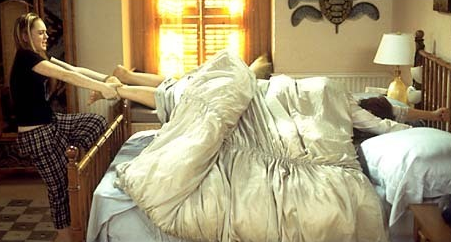
1. A college student at rest will remain at rest unless acted upon by an outside force.

force out of bed

… yeah, just forget about that other bit about being in motion.

getting out of bed

2. Force = mass of your anxiety

anxiety college

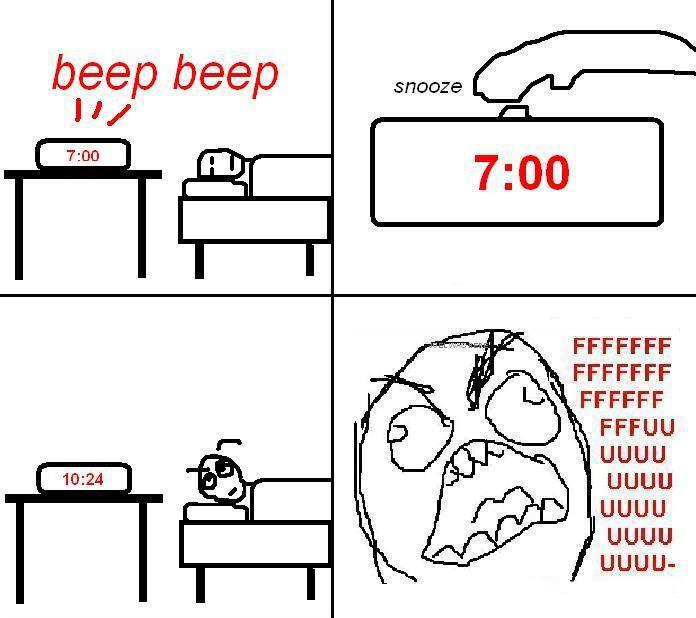
3. For every “snooze” action, there is an equal and opposite “on time to class” reaction.

snooze late

Write with Sarcasm #2

29 Jan

Another installment in that rudimentary webcomic of mine has been long since overdue. Hopefully this one explains some of the delay.

Woooo mental health.

Write with Sarcasm #2

...and after that, we can have a panic attack at all the shit you've not gotten done!

More Than 7 Reasons ‘Frozen’ is Not a Progressive Movie

24 Jan

So, I love Frozen. Like, fairly legitimately love. I’ve already seen it twice and plan on throwing money at Disney a third time once the sing-along version hits theaters. And Olaf the snowman and Sven the reindeer? Definitely on my “most favorite fictional characters” list. They possibly have the most common sense out of all the characters in the movie. Seriously. I love the look on Sven’s face near the end of the movie before he and Kristoff go hurtling back into Arendelle that clearly says, “Why do I have to fix everybody’s shit? I always fix everybody’s shit…”

Thanks Disney! Source: http://www.disney.co.za/movies/frozen/gallery

This face.

But, given all that, I would not label Frozen as “progessive.” Sure, on some points it does marginally better than some of Disney’s previous movies have done, but I think the points made in Gina Luttrell’s PolicyMic article, “7 Moments That Made ‘Frozen’ the Most Progressive Disney Movie Ever” are fairly shortsighted in their praise. I’m rather horrified at the thought that hype around surface impressions of the movie will set Frozen as the new standard for Disney progressivism. Disney still needs to do way better before I grant it the label of “progressive.”

Here’s why.

1. “Elsa and Anna’s abusive parents”

Since when is having abusive parents in a fairy tale progressive? It’s not even new. Cinderella’s stepmother forces her to be a domestic slave. In the original fairy tale, it even happens while Cinderella’s father is still alive. He lets his new wife subjugate his biological daughter. Then there’s Snow White’s stepmother who tries to have her killed. Hansel and Gretel’s father tries to send his children off into the woods to die (but hey, they weren’t his problem anymore, right?) once he remarries. In Aladdin, Jasmine’s father treats her in the usual fashion of female objectification as property. In Mulan, the namesake protagonist’s father orders her about and expects her to be a docile, obedient daughter willing to take her father’s words and decisions without a peep. And while not a Disney film, but in Shrek, Fiona’s parents lock her away because they think it’s the best way to handle her curse. Sound familiar?

Yes, parental misunderstanding of the best way to help a kid with idiosyncrasies of some sort or other is rampant these days. Just like it’s been rampant since always. But while Elsa and Anna’s parents are obviously ignorant when it comes to what they should actually do (like embrace Elsa’s gift and help her learn about it openly, instead of telling her to basically pretend like it doesn’t exist), they clearly always act out of love. And while abuse can often come under the “title” of “love,” I really don’t see anything malicious in what Elsa’s parents do. They were told that if people became afraid of their daughter, they would hurt her. So they in their shortsighted way do what they thought was the best way to make sure nobody would ever be afraid of their daughter. And at no point does Elsa ever indicate that she thinks there’s a better way to handle it or ask for something different. She turns Anna away voluntarily, because she also thought her isolation was for the best.

But then there’s also the fact that even if the actions of Elsa’s parents were abusive, the movie never ventures on to explicitly point out why their response was wrong or suggest how it should have been different.

2. “Elsa’s self-empowerment”

So, I love the song “Let It Go.” I play it on loop. But let’s examine the song in a larger context. Yes, Elsa feels she is finally free to be herself…

…now that she’s been chased out of her community, cut ties with everyone she loves, explicitly told her brand of individuality isn’t appreciated, and decided to continue her life of self-imposed isolation. What’s the message here? “You can be yourself, but only if you’re completely isolated away from the rest of society where you’ll have to deal with disapproval if you do show that you’re different.”

Besides, Elsa still doesn’t completely understand herself or her powers. Sure, she can do some cool shit with it, but she still can’t control it, as we see when she later accidentally nearly kills her sister again. It’s clear that all of the creation that happens during “Let It Go” is coming from emotions like rage, vengeance, and smugness. She’s not calm when she creates. She’s still in emotional throes.

What’s more, it’s not like Elsa’s newfound semi-embrace of her powers came from within. She didn’t just walk outside into Arandelle all, “Look here, people, I’m a BAMF! Watch what I can do!” No. She lost control and was forced to out herself while trying to escape an uncomfortable social situation. The set-up of “go take your strangeness and have it by yourself on some mountain!” is the equivalent of “she was crazy, so we locked her in an asylum.”

Also, what the hell is she going to eat in an ice castle??

3. “Anna’s clumsiness, awkwardness, and honesty.”

Yeah, four words: Manic Pixie Dream Girl

Seriously. All Disney’s done is trade one limiting trope for another.

Also, “until Brave, the idea of an outspoken princess is unheard of.” Really??? How about Belle from Beauty and the Beast, who managed to be outspoken and didn’t sound like an idiot half the time while doing it?

4. “Kristoff’s ability to lead next to a strong woman”

Ah yes, how progressive, we definitely needed another male figure whose authority still trumps that of the strong female lead. Also, “Kristoff is a wonderful example of what a masculine, 21st century man looks like.” Blond, muscular, self-confident and self-made? Ah yes, that totally defies stereotypes and expands the bounds of what we’ve come to understand a man can be in these progressive times…

Really. Kristoff doesn’t seem like the Disney Princes of old because Frozen adjusted its tone to match that of modern teens and twenty-somethings. The characters don’t use the formal language or etiquette portrayed in more period-true movies like Cinderella. For years, Disney’s basically taken modern day people and stuck them in old clothing. But that doesn’t mean they’ve inherently changed at all. When Kristoff first interacts with Anna, it’s to gruffly tell her to move. Dang women, always getting in the way of what men want! Seriously, he can’t even say “please.” Because apparently Anna, obviously a stranger to those parts, is supposed to magically read his mind to know what he wants (because every woman should intuitively know how to please a man, right?). Later, Kristoff escorts Anna to the mountain first because he feels he owes her for the supplies she bought him, and then because he wants Anna to give him a new sleigh. Throughout the entire movie, it’s clear to the audience that Kristoff is condescending towards Anna and doubtful of her judgment. “He’s not afraid to call Anna out on her poor decisions?” Yeah, telling a woman she’s wrong and that a man knows better is really progressive.

Yes, in the end Kristoff falls in love with Anna and tolerates her “quirkiness.” But hey, she is a manic pixie dream girl after all.

5. “Oaken’s gay family”

How progressive is it really if most of the audience isn’t even going to catch what’s going on in this scene? “Oh hey, we’ll make a statement, but nobody will hear it!”

Besides, the man in the sauna isn’t “clearly” Oaken’s husband – he’s much younger and in fact looks like he’s more in the age cohort of the woman next to him. All in all, it’s inconclusive. If he is the gay partner, then great, props. But again, Disney could have done much better.

6. “Arendelle’s unquestioning acceptance of a queen”

“Unquestioning acceptance?” Sure, as long as she’s exactly what they want and expect her to be. But as soon as she exhibits unexpected power, the immediate response is to distrust her and chase her out of the kingdom. Besides, who else does the kingdom even have to rule them??? The previous two monarchs died and the runner-up has been locked in a castle (just like in Sleeping Beauty…) until she came of age. There’s no potential male competitor ever mentioned. And what’s more, all we see is the coronation. Who knows what pressure there could have been on Elsa to marry after that?

Besides, female queens? How about Tangled? Flynn rider wasn’t a prince. He only became royalty because he married into it. Then there’s Brave, which focuses on explicitly proving why Merida’s totally capable of being a ruler all on her own.

And Luttrell’s comment about how at least Anna and Elsa aren’t sitting by twirling around in their ball gowns while a male rules? Yeah, still looks like they’re wearing ball gowns to me. Ball gowns that show off their stereotypical unachievable female figure, no less. And are we supposed to forget the scene immediately before that? The “For the First Time in Forever” sequence where Anna sings about how she’ll get to twirl around in her ballgown and flirt with boys now?

7. “Everyone’s reaction to Anna’s foolish engagement”

Alrighty. The “da fuq?” response to the snap engagement is pretty cool. But yet again, what about Merida, whose story kinda centered around her not wanting to get married at all? I’d say it addresses the trope expecting women to want marriage much more successfully than Frozen, in which, uh, Anna wants to get married. And how about the fact that it’s only Anna who gets chastised for the decision? Everyone focuses on telling her that she’s wrong, but not one single person ever rebukes Hans! Of course, when a bad situation crops up, it’s always the woman’s fault, yet again.

And anyway, what about Disney movies that don’t focus on marriage at all? Alice in Wonderland? Lilo and Stitch? Women have adventures without marriage or relationships even having to be remotely a causative factor.

8. ALL THE REST

There are still so many remaining issues to bar Frozen from being counted as progressive. Like Disney’s continued insistence on perpetuating an factually infeasible female body image. In fact, there was a fair amount of heat before the movie was even released over the comment from Disney’s head animator that no matter what they’re experiencing, no matter what emotion they’re going through, when animating females, “you have to keep them pretty.” Seriously. The very construction of the female’s bodies is ridiculous. BOTH female protagonists, and most of the other women, are still portrayed as stick-thin with eyes that have bigger circumferences than their wrists, heads that have bigger circumferences than their waists, and hands that are actually impossibly too small. The male protagonists fare no better. Both male leads are portrayed as big and burly.

You can’t be “progressive” if you haven’t actually changed anything.

All in all, Frozen takes no drastic steps towards being any different from the rest of Disney’s canon. It’s amusing, it’s got a great soundtrack, and it does mildly better on some points. But better enough to be deemed “progressive?” I don’t think so.


A Ditty for the “Oh God So Close to the Weekend…” Day

24 Jan

grumpy cat latte art

A Ditty for the Last of the Week Days

There was not enough coffee for my coffee cup.

There was not enough coffee to fill the cup up.

I overestimated what was left

in that most beautiful French press carafe

and now my caffeination is dangerously low

and my motivation center is synapsing quite slow

so you all got a half-crazed dump of a ditty

which I hope you’ve laughed at, even if it’s not witty.

Oh god, why isn’t it the weekend yet?

Note: Why the hell do I think of the weekend as “relief?” I usually have to get up several hours earlier…

Are you insane?

22 Jan

Oh look, the road sign for my life.

(originally found on Fitting It All In)

(originally found on Fitting It All In)

Talk

21 Jan

isolation

Talk

I want someone to talk to me.

I rant and rave, tweet and type

and make all the noises I can think to

in this world of ours.

I even say some words out loud.

But usually,

my only responder is silence.

I am tired of having conversations

with shrugged shoulders as my partner.

I wish that you would make some noises too.

At least then while we are lovemaking,

I will feel like it matters that I am there with you, a person.

Instead of just my shadow in the dark.

Or, at least in the afternoon,

you could say hello when I walk into the room,

or tell you something.

But there is no one to talk to me.

My words only sit across from silence still.

And so I will fill this table with my laptop screen,

and seek to douse this loneliness in the chatter

of a world out there having its own conversation.

I go online to have the world talk at me,

so that maybe all the buzz will help me feel okay.

I wish someone would talk to me.

Title (Optional)

20 Jan

So Katherine Fritz, my fellow blogger and an excellent person and kinda-friend who lets me send her overly excited emails about fucking awesome coffee mugs got an agent! And it’s awesome. And she’s hilarious. So you all should head over to her blog and read her post “Title (Optional)” because hoorah smallish-time writers getting literary agents before they’ve even actually written a book because hope and smiles and inspiration! 🙂

Title (Optional).

(No, I’ve not had an entire French press’s worth of coffee today plus also maybe recently a cookie-shaped form of refined sugar… not at all…)

via Title (Optional).

Frustration

20 Jan

A lot of America’s pre-college education seems to focus around making sure that kids know things. I think it should focus more on teaching kids that they don’t.

We teach kids the equations they’ll need for their plug-and-chug recognition homework. “Question type a takes equation process type b with steps c through g.” It focuses on making sure that kids can recall what chapter heading a certain phraseology fell under and and what process they were told in that chapter they should use to solve it. “Do you know what sort of thing it is that you needed to know in order to attack this problem?”

But we never teach kids how to handle not knowing what they need to do to attack a problem.

It’s a problem I first ran into in college. My math and physics problems, they were derivation and proof based. “Here are the theorems and axioms, have fun figuring out how to build your own damn process.”

Uh, no.

Especially since by “figure out your own damn process” my TA’s definitely meant “recreate the already universally-accepted specific series of variable translations we’ve written down in our solution set. No no, don’t do math, originate it.”

Now, there is a dichotomy in me. I am not a math or physics person. You start to say either of those words at me, and I’m going to run screaming into the nearest hipster humanities student-filled coffee shop. I’m writer. I’m also a biologist. Once Caltech finally prints my diploma, it’ll say I earned a B.S. in both.

But really, the workings of biology are something that make much more inherent sense to me. I spent months’ worth of free time hours over the course of my high school career lolling around on my bed, Google searching the shit out of my laptop and staring at the wall while playing around with concepts and generating designs in my head for ways to tweak biomolecules into HIV-attacking machines. There was – is – no set process to calculate the cure for AIDS. That meant I was free to run around with factoids in my own imagination, hurtling through a tunnel of question-answer-roadblock, question-answer-roadblock, as I tried to use what I knew and what I could learn to fill in the blanks of what I didn’t know while wrestling with this problem. Nobody was grading me on how I worked out the problem. No one was going to tell me I had to figure it all out by a certain time and then slap some red slashes and a hopefully two-digit number evaluation at the top. The project was entirely mine to work on. There wasn’t the pressure of expected performance to numb my thinking capacity with adequacy-anxiety. I had the time and mental freedom to think and rethink and unthink and think again without anyone telling me I wasn’t doing it well enough, fast enough, proper enough.

The work I did entirely on my own self-motivation and un-judged learning capacity ended up getting me into a lab the summer after my frosh year of college to work on a project that was in fact trying to build a new sort of biomolecule, a grandaddy triton of antibodies, essentially, to overcome the whole HIV-has-ridiculously-sparse-spikes, oh-shit-normal-antibodies-can’t-get-good-avidity-to-that. ‘Course, that’s when I found out that while for me the mindwork of research is tantalizing, I despise petri dishes and aliquots of clear liquid with a passion so fiery it burnt my enthusiasm for the underlying problem to a dead crisp. And so ended my lab career.

But anyhoo, I tell all of that to contrast it to those terrible math and physics problems I had to grapple with on my frosh and sophomore college homework. The problem there was that there was a particular blueprint for building the process. I couldn’t just fiddle around dreamily with the nuts and bolts, wandering around in factland away from the glowering stare of a deadline. Because those math and physics homeworks were due tomorrow. And I needed to know how their axiomatic parts fit together by, like, yesterday. Probably by last week, actually.

But, despite going to one of the top universities in the nation, I was at a school full of smart researching professors and smart ready-to-learn students where the smart researching professors didn’t know how to communicate with their smart students through the language of lecturer for shit. I had the axioms chucked at me in a lump and never had time spent or given to think about their implications. Sure, there was this phrase, and it said this thing, but goodness knows I was never given a chance to properly think about what the fuck did the phrase actually mean. And when it came to those homework proofs and derivations, there was no set protocol or process for doing them. This wasn’t “how do you do this computational procedure?” This wasn’t “how do you fit these parts to this process?” This was “what tricks of second-order cleverness do you need to play hide and seek with these notation symbols and thus pop out in Neverland?”

How. the fuck.

And, because I’d gone through high school being a good student who’d always made sure she knew what process a question was asking her to proceed with, I naturally looked at these procedureless questions due in a matter of hours and began to cry.

No, actually. My hours of struggling through physics and math sets are more saturated with tears and skin-grating frustration than anything else. I didn’t know how to go about figuring out the problem, and I was time-limited enough that I felt too pressured to spend time playing around with its components to see if maybe something I did would work. I expected myself to know what I was supposed to do, now. And I didn’t.

I was paralyzed. I didn’t know what I needed to know, and I had very little confidence that I’d be able to figure out what I needed to know before the set was due in any manner that wouldn’t result in my brain feeling like a nuclear bomb had gone off in it a despairingly short time in, and so I froze. I hated myself. I felt so. fucking. inadequate. All because I’d not been taught how to figure out a solution – because there was a known, set solution already – from scratch. Because with all the good lectures did me, I was approaching my homework sets with an effective knowledge base of zero.

Sure, there were lots of issues going on with my math and physics education for those two years, and those problems weren’t all because of my lack of mathematical capacity or the style of my pre-college education. (Take, for example, the unmedicated clinical depression I had at the time.) But the fact that I wasn’t emotionally or conceptually prepared to handle not knowing at least what it was that I should have known to figure out a problem – that was still a factor.

So, three years later, having gotten my head out the mire enough to figure out how to at least somewhat productively stumble around in the muck of it all, I do say that freshman-me might have benefited quite a bit if my pre-undergrad education had focused a mite less on “let’s check if you know what to know” and more on helping us learn how to bear up against when we wouldn’t know. I’d have appreciated learning how to the statement, “Okay, kids. You don’t know anything.”

“Now, deal with it.”