
Love’s a terrible thing
when you’ve been reduced to a scheduling item –
the emotional equivalent of a lamppost,
lovely and terribly convenient to have around,
but not exactly a high emotional investment.
Sometimes you don’t even notice
when the bulb’s gone out.
And then the stretch of putting it off and putting it off,
always meaning to attend to the deadness in your room,
but so much a second thought
that such a nonessential scheduling item
stays dead,
for months,
until finally you know you’ll never put a bulb back
and say fuck it,
then throw it in the trash
so you can get a different, shinier lamppost.
I did not like being that scheduling item.
My bulb left broken for much too long,
even though you kept saying that one day,
things would be brighter.
Poem: The Anger of a Lamppost
8 JulI need to write a story.
7 Jul
I need to write a story. I need to write a story where the characters don’t die, or wind up ground on the pavement in a bloody mass – literally or figuratively. I need to write a story where everything works out.
But I need to write a story that’s real.
I don’t know how to fit those last two sentences together.
My story has already seen its characters die, so many now that I’ve stopped ticking off the number of funerals I’ve attended and let the number stretch vaguely into oblivion. My story has characters ground up meatily on the pavement – though mostly figuratively, on that point.
I think I’m one of those characters.
Life is confusing to me. It’s perhaps why I’ve been having such a hard time writing stories, lately. Everything’s on hard mode, and I don’t understand why. I have tried. I have stayed. I have fought. I have pushed. I have kept going.
Why hasn’t it gotten any easier yet?
I see people – former classmates, neighbors, random interviewees on the news – who seem to have gotten the soft route. Yeah, everybody’s got shit to deal with. But these people, they seem to have gotten the milder, nicer-smelling brand of shit. They prance around in their pastel-colored world with high-end fabrics and bleached hair and sunglasses the size of mating saucers on their face, and… it’s not that I want their lives. I don’t. At all. But… they seem happy.
They have their success, their fame, their goddamn fucking fortune – and they are satisfied.
I want to be satisfied.
I have all this hard work, all this trying, all this hoping and hurting and hacking away at all the obstacles life’s chucked at my nose, and for it all, I have only…
loss.
The little bits of satisfaction I find slip away, taint with time or fade so that the blaring wrongness of this story is what comes out stronger than the former salve of the moment’s calm.
I don’t like this story anymore.
I’ve been trying to write a different one for such a long time.
I worry there isn’t any different story to write anymore.
Flash Fiction: The Kindle Crime Syndicate
3 Jul
I expressed envy at my friend’s recent acquisition of a Kindle Paperwhite. While I also am incredibly lucky enough to have a Kindle, it’s an older version with what’s basically a tablet screen, a.k.a. computer screen. So uh, ew. I mentioned that if I really want a Paperwhite, I should probably just social engineer a swap or work some kind of reduced payment scheme out. My friend, however, had other ideas…
“That,” he suggested, acknowledging my swap idea, “or become a master thief, steal one and relish in the joy that you were able to get one of your own. It never stops there though, does it?
You think, What harm will it do if I take this book? Suddenly, you find yourself stealing every once in a while – a book here, a top there, a cute pair of earrings; who will miss them, right?
Eventually it’s an unending thirst, a constant struggle to do moral good versus the unadulterated bliss you feel when you take something and make it your own. Your dark descent leads you to convince others to help you in your crimes. Your band of thieves grows and grows, until it’s no longer a band, it’s not even a network; it’s a criminal syndicate.
Your name, only known as ‘The Mice’Ala,’ is known to all in the underworld. Who is this figure? How can she manage to plunder everything within her grasp at a whim? Your thirst for lust and power grows unbounded – murder, human smuggling, these are all small and trivial steps you use to achieve your ultimate goal: complete and total domination over the human race.
… I guess what I’m trying to say is, you’ll get a Kindle Paperwhite eventually, no worries.”
Well then.
Hard Conversations
2 Jul
I have had so many hard conversations in my life. Conversations where I confessed, conversations where I demanded, conversations where I chided and begged and pleaded and cajoled and cried.
I have had so many hard conversations.
There was the conversation where I was told I could die. There was the conversation where I told the exact same thing. To my mother. To my friends. To my lovers. To strangers. Again, and again.
There was the conversation where I told him I loved him. No matter as to whom “he” was. That quivering, shaking moment right before the slight intake of breath, then the desperately frightening murmur. “I love you.”
The silences in that conversation have always been the best and the most painful.
I have had so many hard conversations.
There was the conversation about her miscarriage, and hers, and hers. The conversation about his mistake. The conversation of confusion, of denial, of the world cracking about me and my soul bleeding out into the fractures.
I keep trying to have that conversation again.
I so desperately want it to go differently.
I have so many, many hard conversations.
There are the conversations I have not had yet. The conversation about the weariness I’ve newly heard in his voice. The conversation about that affair, and my lifelong anger with its inexplicable forgiveness. The conversation where I say that I am afraid, and put up one more wall. The conversation I will have more with myself, than with anyone else.
There are the conversations I have daily, the interminable cajoling of my tear ducts not to cry, of my heart not to break, of my legs to keep moving forward and of my hands not to rend me in the thousand ways they could have me end.
I chatter ceaselessly inside my brain, so much daily convincing must I do.
It’s not an easy conversation to have, after a while.
I get tired of having these hard conversations.
There have so many of them in my life.
How Ke$ha Did Rehab Right
28 Jun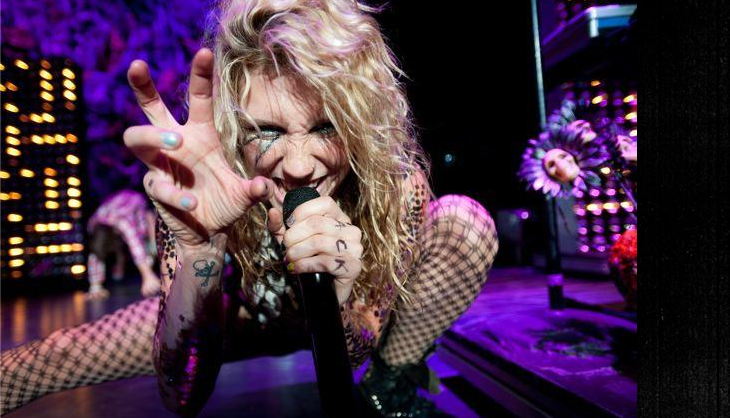
I don’t really do celebrity junk magazines. But I do invest a fair amount of my glancing power in eating disorder recovery-related Facebook feeds. And recently, Ke$ha’s been showing up a lot.
I adore Ke$ha as an artist. Her songs are bold and crazy and unapologetic, just like Ke$ha herself. The singer has always put out a very “be yourself and take no prisoners” vibe – which is why I was rather surprised when it went public earlier this year that she was going to rehab for an eating disorder.
Now, like I said, I don’t really keep up with celebrity gossip. I’m more interested in keeping up on the latest book chatter or marine biology news flashes, thank you very much. But maybe if I did stalk the stars like so many others, I would have known more about Ke$ha’s lapse and anticipated her entering treatment more. Maybe I would have seen the signs. Maybe I would have noticed the gossip columns abuzz with slurs about how the pop queen was looking “scary skinny.”
But honestly, I don’t think I would have. After having come across the first article mentioning Ke$ha’s entry to rehab (and holding that up as a model for others who might still be suffering silently), I did some research. By which I mean Googling.
Hey, I’m only human. We are creatures of curiosity.
But that Googling – well, it didn’t really turn up much. No descriptions of paparazzi’s having glimpsed Ke$ha’s rib cage or clavicle or whatever. No star-spirals-downward slurring. Just more of the same sort of bare posts, saying nothing more than that Ke$ha was going into treatment for an eating disorder. They didn’t even say which one.
And that, I think, is incredibly important.
Since leaving treatment, Ke$ha’s put out a few comments on her pre-rehab self and what motivated her entering treatment, but none of the comments that I’ve come across have talked at all about the physical specifics. Unlike so many other stars – and regular ol’ non-famous ED victims – Ke$ha doesn’t indulge in some sort of victorious litany of what her symptoms were, how skinny she got, how much she purged, or anything like that. All she says is that she wasn’t loving herself properly and wasn’t really confident in herself.
Thank – well, thank the stars. Finally, one of them who talks about what eating disorder are really about. They are not a disease of skinniness. They are not a disease of food. They are a disease of self-hatred. Doesn’t matter what it looks like, that is what goes on, in every single patient, underneath the physical symptoms.
I laud Ke$ha on focusing on what eating disorder recovery is really about: learning to take care of yourself and value doing so. Learning to love fighting for yourself, instead of fighting yourself. Finding contentment in being a whole person, instead of in stripping away your very existence.
Ke$ha could have talked specifics. She could have talked diagnosis, labels, numbers, gritty details that would have gone viral on gossip sites. But instead, she clamps down on the triggers and talks about what’s really important. It’s her recovery she promotes, not her eating disorder.
For the millions of adoring boys and girls hanging on her every word, that is so important. For the casual magazine browser at the grocery store check out, that is so important. For the eating disorder victims who are honestly really damn done having celebrity nonsense about our disorder thrown in our faces, that is so important.
For Ke$ha, who will still be fighting to keep her hold on recovery for a while, that is so important. She clearly invested herself in rehab; it’s good to see she’s doing recovery right, too.
Parents
27 Jun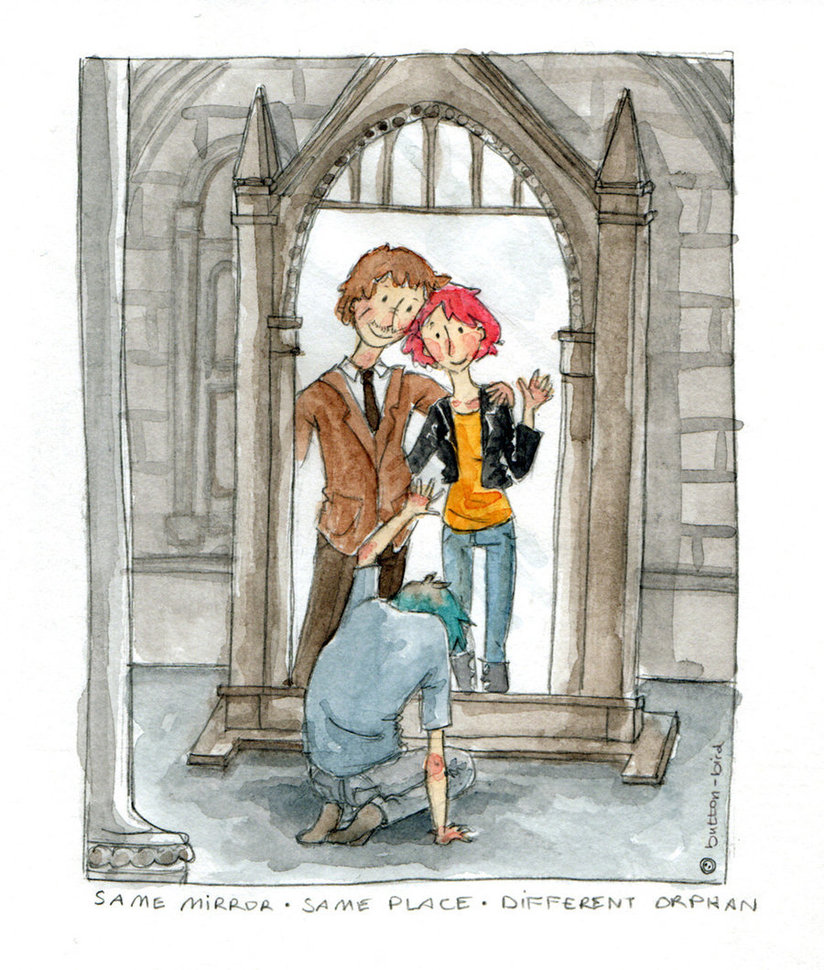
I don’t write normal parents. Not that I write parental figures with seven limbs, or serial killer tendencies. I just don’t write “traditional,” functional relationships between parental figures.
Yeah, hi there Freud. I see you smirking over there in a corner.
The more I’ve written, the more I’ve come to notice about my abnormal parent figures. The fathers, for example – most of the time, they just don’t exist. My earliest stories, written in the big, round handwriting of an eight or nine year old, they just didn’t have father figures in them. The absence wasn’t a key component; it just was. Without explanation or ado. It was just the norm for my characters, something they didn’t think twice about.
Makes sense, seeing how for a very long stretch of my life, it was something I didn’t think twice about either. Business trips, golf trips, hunting trips, gambling trips, affair trips. My father’s presence was an anomaly, not a rule. I simply didn’t know how to write about present fathers. I had no material.
Mothers, however… Even before I hit puberty, they got a broader ranger of characterization. They were present, for one thing. Sometimes, they were caring. Or neutral, at the very least. NPC’s there for the main character to interact with, if not exactly salient actors in and of themselves. Other times, though…
Off the top of my head, I can think of at least three pieces of writing with abusive mother figures in them. Around thirteen or so, I spent my nights angrily scratching out a story of a nineteenth-century, Sarah-the-little-princess-esque near-orphan girl whose central conflict was with a physically abusive mother. The narrative was basically F. H. Burnett’s novel boiled down to a purely familial relationship. The horrid school teacher became a sort of evil stepmother figure – minus the “step.”
Abusive mother figures have shown up again and again in my writing. Left alone to parent because of an inexplicably absent husband, they take out their anger of what life has dealt them on the children life has dealt them as well. They cause silence in their daughters. They cause their girls to withdraw and go insane. They yell. They hit. They degrade.
They are not my mother.
My mother has always been more of a passive victim, or inactive co-conspirator at worst, in my eyes. My worries around her have been of the protective sort. When it came to the battles between her and my father, my mother is always the one I have sided with. I have been frustrated with my mother, yes, but more for her inactivity. She has accepted my father’s maelstrom. She has not fought back. Even when I needed her to.
And yet she, in her many literary representations, is the one that I have made the abuser.
Perhaps it’s because in some way, I do hold her responsible. She didn’t stop my father. She taught me to shut up and keep quiet about it. She passed on a sense that I must just deal with whatever shit I’m served. That having someone and taking their blows, emotional or otherwise, is better than having no one.
Over the course of my childhood, I asked her again and again to do something about this father of mine. Tried to make it clear how it was hurting me. Hurting my younger sister. Hurting her.
Her response was largely to shove her head in the sand.
With the life experience and therapy and psychology education that I now have at 23, I can rationalize her actions. I understand victimization. I understand co-dependency. I understand the fear that leaving something bad will only result in something worse. I understand. I do.
But I think that growing up, and perhaps even now, some part of me still holds her responsible.
Why not write father figures that are abusive? Why not assign the blame where blame is more truthfully do? The defensive answer is that it’s my writing, and I’ll do whatever I damn well please, thank you very much.
The more truthful answer is that I’m not sure I could handle it. Not sure I want to have to handle it. I already dealt with one abusive father, thank you very much. Why would I create even more, in my writing? I have a mother that I love. That I want in my life. Even with all of her fretting. So even if I write a culpable mother figure in my stories, I still have a less culpable one to return to.
I cannot say the same of my father.
So much of writing is a sort of authorial wish-fulfillment. While 99% of my narratives barely involve a father figure at all, the 1% that do feature fathers that look nothing like my own. In a YA manuscript I begun writing at the the age of 14 and have been editing ever since, there is a father figure that I am fairly shocked by. He is calm and gentle. Scholarly and patient. Quiet and fiercely caring. He cares for both his daughter and his wife. He might disagree with his well-meaning but overly-fretful wife sometimes (the fictional mother who comes closest to my own), but he does not belittle her.
Ah, hello there, fairy tale father.
I find it somewhat comforting to know that in the narrative that contains the most real version of my own mother, I would assign her a partner much better than the one she’s got. Even with all of the frustration I channel at her through those other less-realistic mother figures, when it comes down to the “real” her, I would wish her more happiness than what she has, rather than punishment. I want better for her.
I want better for myself.
Poem: Death’s Regret
22 Jun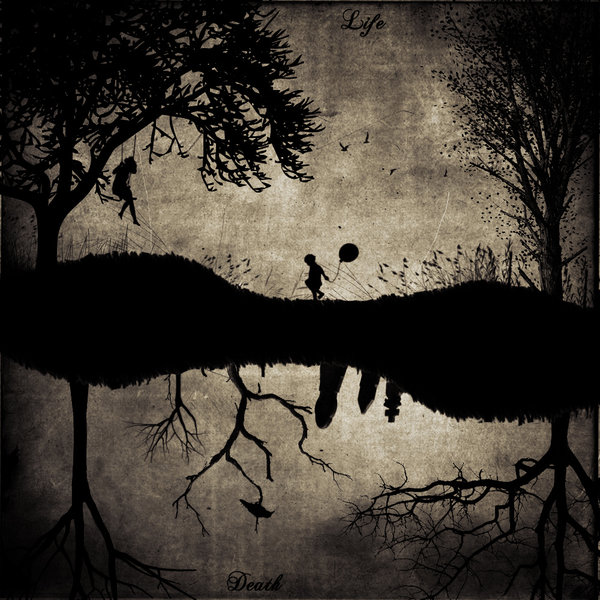
Death’s Regret
I tire of this death,
I am weary of destruction.
I want nothing more
than to see the end of the day out.
I wish for nightfall
and yearn for explosion.
I ache for the cavernous
to hold me without doubt.
I cannot escape seconds
having none of my own,
and time is a cruel friend
as it only ever leaves me.
Constancy is frozen,
unchanged to the bone,
but I am infinite,
an in-understandable cruelty.
I give relief to the ones that are crying.
I take away the pain of your strife.
I am locked here, while you are escaping.
I am Death. I have no such life.
A Lover’s Lament
19 Jun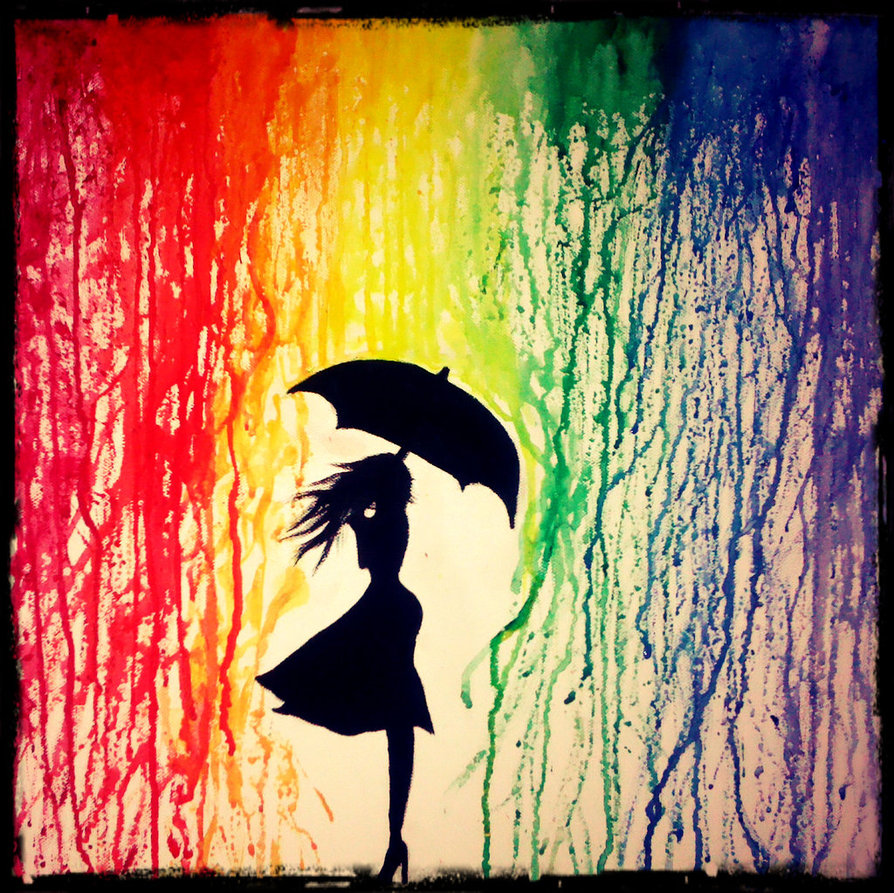
A Lover’s Lament, or “I Am Confused.”
I am confused, dear lover. I am confused how you could choose to throw me away like trash, while I am only just now beginning to slough off the skin of our life together like so many dead cells become love litter. The detritus of memories rots there on the floor, as every day I am forced to trample it underfoot as if it were nothing, and I were not worried in every moment that something will snag and I will trip. Too often, so often, I fall anyway. I am confused, dear lover.
I am confused, dear lover. I am confused how you could not be at every moment distracted, wondering where the new rush of air through one more hole you hadn’t noticed in yourself is coming from. Does not your body ache from the pock marks of so many barbed associations? Are you not left with new emptiness and crevices as the once fertile ground of your soul dries and cracks with a terrible opening groan? Do not you feel as if there are parts of you missing? Are you not spending every waking and sleeping moment searching for where they have gone and how you could possibly, desperately, ever in your life or your death get them back again? Are you not dying from the nothing of where you used to be filled? I tremble every second, wondering if this will be the time when my increasingly paltry skeleton crumbles. Did I not make up just as much of you? I am confused, dear lover.
I am confused, dear lover. I am confused how you could have escaped the shroud of insanity that is slowly settling over me as I see your ghost at every turn. My mind breaks just a little more every time I must exorcise your demons, finding again a phantom that must be released from a particular way of flicking my hand, or tilting my voice, or arranging my face. I do not know whether it is better to slowly tease away where you have interwoven with every fiber of my being in an attempt to salvage what is left of the original cloth, or if I should just cry to hell and remove the stuff of both you and me with a slaughter of tearing, unforgiving attrition. It’s not like I would be left any more frayed than I am becoming now. I am surprised, from the way that your fingers used to interlock with mine, that you are not finding yourself similarly ragged. I am confused, dear lover.
Oh dear lover, I am confused.
The Crushing Inevitability of Cakes
16 Jun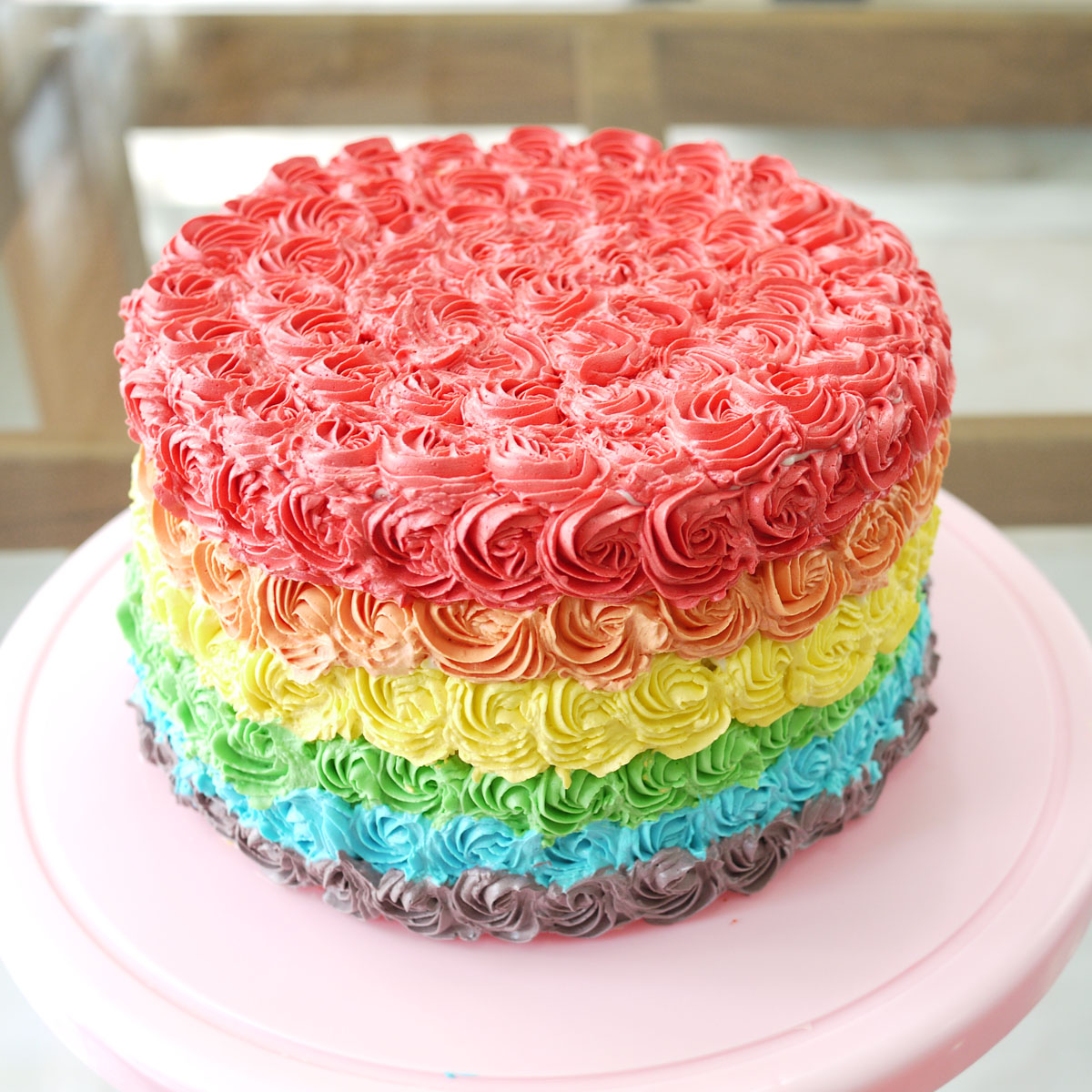
The Crushing Inevitability of Cakes*
There is a crumbiness to life,
a moist, dense sadness that dries out and falls apart
if you leave it alone on the counter for too long.
The icing crusting and rusting and rotting around the edges,
making you look at the slow decay of a sugary promise.
But then you laugh,
watching the calories subside into their own frivolity,
and you decide,
perhaps, I will have a piece anyway.
———
* No, I also have no fucking clue why I’m writing sad nihilist poems about cake.
 Quill Aquiver
Poem: At The Market
5 Julsource
At The Market
Today while at the market I heard
a most skeptical remarking word
about the tattoo behind my ear –
“Do you know it’s there, my dear?”
The asker proved an elderly man
and I so young at twenty-three
could only smile and reply
“yes,” most delightful and politely.
“You were drunk that night?”
the old man asked, and I just laughed if off.
“No, I planned this pawprint,” I smiled,
But still the man, he scoffed.
“You volunteered?” he said incredulously
so I smiled and laughed again.
“Yes, it’s a memory,” I explained.
“Identity in my skin.”
Perhaps I am just an upstart
Or perhaps he is just rude,
But my appearance is not his call.
In the end, he’s just some dude.
Tags: appearance, choice, commentary, criticism, decision, elderly man, feminism, feminist, identity, independent, liberation, mansplain, market, old man, physical, poem, poetry, satirical, tattoo, Victorian