Archive | Thoughts RSS feed for this section

What Happens When You Have Facebook Friends from Treatment

12 Nov

There’s something about having facebook friends from treatment. It’s an odd sort of dynamic, because I don’t think other people have it, those people that haven’t sat in a room full of twelve other girls and shared their deepest secrets and cried their eyes out in front of all of them, and then moved on and discharged and never talked to a single one of those twelve other girls ever again.

Sure, maybe we’ll do the occasional photo “like” when it randomly shows up in our feed. But if that photo contains any portion of the body of that girl from treatment, that’s when the scrutiny begins.

Are they fatter? Do they look like they’ve lost weight? Can you still see the little pudge of skin between their breasts and their arms? Are their cheek bones showing more than when you last saw them? How about the collar bones? And the color in their face? Are their arms still carrying the appropriate amount of flab, or do they look like they’ve gotten a little bloated from purging again? Were they brave enough to instagram a pic of their meal? Are they still calling attention the fact that oh man, they ordered fries? Or have they gone a little food-crazy on their wall, posting pictures of ever-increasing portion sizes you worry they haven’t even noticed?

Where are they in this love affair with starvation and stuffing?

You haven’t seen or talked to them in six months. But because their new profile picture popped up as you scrolled through the detritus of other people’s lives, you stop and wonder all that, in a matter of mere microseconds.

Or maybe you don’t. Maybe you hurriedly flick your mouse pad or your down arrow key, because for all that work you did learning to deal with feelings, this picture of someone you cried your eyes out to and then never talked to again – and who, identically, never talked to you – this picture makes you just a little too uncomfortable.

But still, even if you ignore it, there is something to being facebook friends with girls from treatment. Because even if you ignore it, even if you shove that image that flashed across your retina and branded you once again with feelings you thought you could choose to ignore, the question will still be there. It will still nag, day in and day out, at that part of your brain that remembers sitting that room crying your eyes out in front of those twelve other girls.

How are they doing?

Date Books

4 Nov

For my almost-little sister. It was good getting coffee.


It’s funny how cancer changes things. You suddenly have the urge to see them more often. To take them out for coffee or have them over to your place, just like you always meant to. Told yourself you’d get around to. Later.

You wanted to, really, until wanting to slipped beneath the pile of work you wanted to get done, the emails you wanted to send, the pants you wanted to buy, the TV shows you wanted to watch – that stack of acts and intentions that life collects on everyone’s desks.

This sense of incessant urgency, it does not come from the fear that something may be taken away from you – or so you tell yourself – but from the affront that she has been given terribly more, and you thought you might help carry some of it.

Funny, how cancer changes things. And then, that’s only thinking about it for you.

An Open Letter to Private Boys’ Schools

28 Oct

Dear Private Boys’ Schools,

let’s talk about your rape education program.

If you even have one.

As someone who attended a private all-girls school from the age of 3, I received a fair amount of self-protection spiels. From the awkward “it’s not okay for anyone to touch your private parts” mumbles I received in elementary school to the assembly of junior high where a police woman came to talk to us about reducing our risk factors as potential targets to the high school prom night safety and it’ll-ruin-your-life-to-get-pregnant talks, I was doused in awareness from the very beginning that there were people out there who, if I wasn’t careful, would try to take advantage of my sexuality.

Sure, threat prevention awareness is a good thing to learn. But notice how it was presented to me as an “if I weren’t careful” scenario? Notice how I was taught about “reducing my target risk-factors?” While I was never explicitly told that it would be my fault if I were raped – in fact, I was usually vocally told the opposite – that message was still insinuated by the very approach the rape education programs took.

And oh hey, just a side note – nobody ever taught me what to do if I were raped. Police calls, hospital rape kits, legal paths, therapy – I only found out about those things through watching Law & Order SVU. In college.

But most of that, I suppose, is irrelevant to the main thing I’d like to tell you, oh vaginaless boys’ schools. You see, what I’d really like to say is that while all those rape talks about making sure we were safe might have done some good for me and my fellow females, it would have done even more good to have made sure there weren’t any rapists to begin with.

And that’s where you come in.

If anything, the rape rate would go down more drastically if boys were taught how to not rape. Girls don’t get to choose whether or not they’re victims. Boys always get to choose whether or not they’re rapists.

Sure, not all rapists are male and not all victims are female, but as things stand right now, males do make up the majority of aggressors. Where “majority” means 99%.

But surely, your sweet young upperclass boys who have been hand-fed good, moral values from the age of five would never do something so terrible?

Well. That has not been my experience.

I had friends who had been raped by the time we even got to be seniors in high school. It wasn’t by some thug from the bad part of town. It was by one of those nice, privileged boys that their friend had just gone to the winter dance with. The straight-A student, the drama club regular, the average joe on their crew time they’d hung out with on Friday nights. You know, the one nobody could ever envision as a rapist.

I mean, the sense of entitlement that would require!

Surely this son of a lawyer who drives his shiny car to school and has a tight group of male friends to back him up no matter what he needs would never have such a sense of entitlement. Sure this good Catholic boy who was taught that a vagina is a prize to be won by wedding vows would never be tempted to think he deserves the goody bag early!

Oh. Wait…

Hopefully by now you’re seeing my point. Those innocent young boys in your private prep school, they’ve been set up by their socioeconomic status to maybe become not so innocent. And even if those traits don’t quite take hold in adolescence, your boys are the ones who go on to become the frat guys you read about in the news who got to college and decided that finally, sex was theirs for the taking. Or if they make it beyond that, they are the ones who form into utterly distinguished businessmen with prim-and-proper wives and a white picket fence and a routine predictable as clockwork and 7 am traffic, and who when they become bored with their utterly distinguished, utterly regimented lives find themselves relieving that boredom in their niece’s bedroom…

No, these are not figments of a perverted imagination. They are real stories. Of my friends.

So. Now that we’re all properly horrified here, what do we do about it?

Well, let’s go back to those rape prevention talks I mentioned earlier. How about we have them again, except at your school this time? How about we make rape prevention as important a curriculum component at boys’ schools as at girls’? And while we’re at it, why not incorporate it into a recharged version of sex ed? One that could be used to teach both boys and girls, at private and public schools, from a practical perspective? Because honestly, telling us that hey, here’s your reproductive system, and it will do these things is about as helpful for managing daily sexuality as telling a pilot-to-be that hey, here’s a diagram of a plane, it can fly. Great. Now the pilot knows the plane can fly. Probably has no idea beyond that what the fuck to do with it.

Why not go beyond the mere “here’s a uterus and a vagina, here’s a penis and testicles” to actually tell budding pubescents, “and here are some feelings that you’re probably going to have with respect to your particular genitals, and here’s how to handle them.” Instead of just telling kids that it’s not okay to have sex before marriage, why not focus more on telling them that it’s not okay to abuse another’s body? Teach about abstinence in religion class. Teach about consent in sex-ed.

Seriously, there are so many ways to tackle teaching boys about rape prevention. And they’ve been shown to work. Take, for example, the “Don’t Be That Guy” campaign in Vancouver that led to a 10% decrease in the rape rate. Or the course designed by Foubert, Tatum, and Godin that told men, among other things, about other males that had been victimized – and that even led participants to report two years later that they had retained perspective and behavioral changes as a result of the course?

For decades, girls’ schools have been trying to keep down the rape rate from their side. Honestly, hasn’t done a whole lot of good.

Guess the ball’s in your court now, boys’ schools. Whatcha going to do?

I really hope it’s not just sit back and change nothing. This is not somebody else’s problem. It is yours.

Sincerely,

Miceala Shocklee

A Dying Dreamland

17 Oct

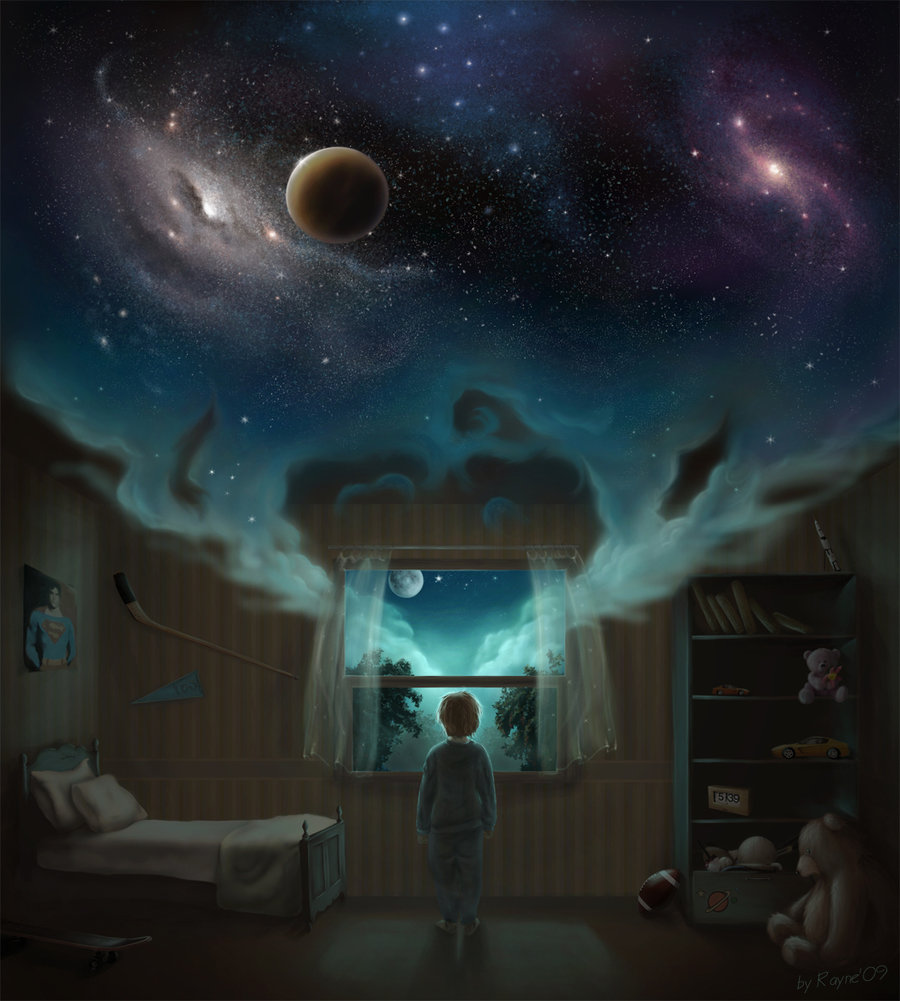
dreamland 1

I think I have forgotten how to dream. There is a dead and dullness in me that can provide no spark for the shell of my imagination. My soul has gone silent, weary.

When I lay down at night, my head is filled with the noise of the words I was meant to think during the day, when only the repetitive, solid clunk of sandpaper phrases like “job search” and “paying rent” were heard instead, because no matter how I try, I do not have time to sit and think. Not when there are textbook chapters from a week ago to be read. Not when there is neurology homework to complete. Not when I woke up too early, stayed up too late, been too sick and too tired for too long and my brain is too slumped from fighting itself or too hazy from illness. Not when there’s always one more thing to get done.

I am empty. I have written myself – what more can I do? I have faced the truth of myself, found the cathartic relief, the cathartic release of turning myself into words. I have written my pain and written my cracks and written the rawest understanding that I have of myself. I have written my memoir. I have written my truth. Now, all else feels a sham.

I have always been too much in my characters. My heroines, they are vessels of my dreams set out upon a sea of words. They are the stories I could not tell in my life, the adventures, the happily ever after. They were the stitches for wounds I had no other way to heal.

But it was all subconscious before. Sure, to some extent I knew I had been projected into my characters, but now – there is an awkward consciousness that what I am trying to write is just one more shadow.

Do I have no more dreams? Every time I set my mind wandering, the worlds all feel thin and shabbily built. Nothing feels like a good enough premise. Nothing feels good enough to be made real.

And so I toss the frail wisp of narrative away and watch it drift off, flimsy and sticky on the wind of being forgotten.

There is a ghost of a girl mourning within me. She holds a pen. She thinks that I have forgotten how to dream.

Brains are weird.

19 Sep

brain art

Good morning lovely readers! I’m back from my sojourn to the US’s southern regions and have returned to the land of no humidity where I don’t wake up every morning with a dozen new mosquito bites. It’s the little things in life.

But, lovely readers, I have a bone to pick. Well, not so much a bone as a fairly squishy organ. Yup. The brain.

Brains are weird. And by “weird” what I really mean is “confusing asshole.” A lot of you may know that I am a depression recoveree. (Yes, I know the word is technically “recoverer,” but I like “recoveree” better and this is my blog, so there.) Most of the time I am some level of “fine.” No, this summer wasn’t the nastiest my depression has ever been, but it was fairly unfun. Whatever.

For the past three weeks – the period of time I spent traipsing around Florida and Georgia with my boyfriend and my best friend – I’d found a sort of respite. For three blessed damn weeks, it wasn’t a struggle to push myself out of bed in the morning (beyond my normal pre-coffee grogginess, that is). For three weeks, I didn’t have to walk around feeling like my heart was twisted into a coil and my soul was stuck crushed beneath an anchor. For three weeks, the shackles of anxiety and worry and loneliness I’ve grown so used to trudging around in that I don’t even think of them as “not normal” anymore – they just weren’t there. Sure, there was a maybe a moment or two of freak-out, but they were only that – a moment. I wasn’t left with an unrescinding haze hanging over me for days. I felt… free. Light. Even happy.

Then I come back to Los Angeles. Normally touching down at LAX fills me with relief (usually ’cause I’ve just returned from an obligatory trip to that emotional war zone known as my house in Missouri) – but this time, not so. I felt… lonely. But whatever. I shook it off as jet lag or something.

Then I entered my dorm room.

This is why I say brains are weird. (Ahem, confusing assholes.) Brains make connections between physical locations and emotional/physiological responses, right? Seriously – that’s why some drug addicts can overdose on what had been a usual amount of whatever substance for them if they do it somewhere out of the ordinary; their brain wasn’t given the environmental stimulus that told it “I’m going to do x amount of y here” and so it didn’t ramp up the necessary physiological response to cope with that x amount of y.

Anyhoo. Back to my dorm room. About that environmental stimulus… sure, I had just spent an incredible three weeks being happy, but guess what connection my brain had made between my being alone in my dorm room and what emotion I would be feeling?

Yup. Hey there, depression. How not nice to see you.

I keep trying to tell myself that the amount of sadness and loneliness that came crashing over me is understandable. Yeah, I had just spent the past three weeks surrounded almost 24/7 by the people I’m closest to – it’s understandable that there would be some kind of backlash, some kind of withdrawal to their suddenly not being there. I hope.

Yes, I had spent the entire summer forging a connection between the “dorm room” and “depressed” neurons in my brain, so of course there would be a noticeable shock when they fired together again after having laid dormant for three weeks. I think.

It’s just… odd, feeling these feelings again after having been happy for what feels like so long. It’s like I’m walking through a familiar landscape, but suddenly all the angles are odd and the walls jut out in weird places. While yes, this loneliness and the sadness born from it are familiar dressings, suddenly the skin just doesn’t fit right. I have found another shape, and the part of my consciousness that knows that is disgruntled at being forced back into old containers.

With diseases like depression, they say you can’t run away from it, because wherever you go, there you are. But what if it isn’t me? What if it is where I am? The place where so many events and tears have stained the carpet and the walls with memories and expectations? What if I can go somewhere else where there aren’t those constant visual triggers? What if it is not that I can’t run away from it – but that I can at least not walk right in?

On Silencing

8 Sep

face in hands

Hello lovely readers. Today, September 8, is the start of National Suicide Prevention Week.

So, let’s do some talking.

I’ll likely write a slew of articles this week. Book reviews, rants and ravings, maybe a poem or two. But to start it all off, I thought I’d start with a more personal article.

Because for me, suicide is a highly personal topic.

I cannot point to a single day, a single moment, and say “that’s when I first became suicidal.” I cannot even say when I first learned of suicide. It’s one of those things – and perhaps that is sad – that I have just always seemed to know about. I can remember being six or eight or maybe even as old as ten (though I think that is less likely), sitting on the couch of my house’s “play room,” surrounded by the trappings of a middle class American childhood, and wondering about running a knife from the silverware drawer downstairs across my throat. I don’t remember what in particular I was wondering – perhaps how much it would hurt, or what it would feel like, or how long it would take to bleed out – but I do remember hastily shoving the thought back to some dark corner of my mind and thinking no, that’s not a good thought. Jesus wouldn’t like it, because suicide (according to what I’d been taught somewhere along the line by my Catholicism) was a sin. And because suicide was a sin, it was out of the question. Period.

Again, I don’t know why I was thinking about suicide at the age of six or eight or less-likely-ten. Perhaps my father had gone into an alcoholic rage at my mother again. Perhaps there had been yelling. Perhaps there had been crying. I’m not really sure. You see, at that young age of six or eight or just-maybe-ten, the thought that something might be “wrong” with my household hadn’t really registered in my consciousness yet. Things like parents’ having separate bedrooms and the sound of yelling echoing upstairs after bedtime – that was just the way things were. That, for me, was normal.

For years, all I had was the occasional twinge of a particularly painful cramp in my soul that made me wonder if the constant vague sense of unhappiness that colored my life was, perhaps, something out of the ordinary.

Why do I go into so much backstory? To make the point, perhaps, that when over my junior and senior year of high school I progressed from “vaguely unhappy” to “clinically depressed” to “self-injuring and suicidal,” it was so much a progression of the natural order of things for me that there really are no milestones to remark at. One year I’m unhappy but still counting on that future tense. The next I’m going home every day after school wondering if it will finally be the day I kill myself. Try to rewind or fast-forward or pause somewhere between those two, and it’s all just a blur.

I suppose I mention all of this to give grounding to my opinions when it comes to suicide. No, I cannot speak for everyone on this point. But hey, I’ve had a fair amount of first-hand experience (not to mention second-hand experience in the way of mental health counselor training and acting as a peer mentor), so I do know a thing or two.

If you really want to know more about the nitty gritty of what my experience has been like, I suggest you look into my memoir, Drop Dead Gorgeous (more info here). But I suppose that what I want to say in this particular thought stream is that if I were limited to making only one statement about suicide, it would be this:

We need to talk about it.

Suicide should NOT be lauded, but neither should the dead be scorned. I know it’s scary as hell to say “I want to kill myself” and scary as hell to hear, but the taboo that so pervades most society and leads people to die silently so they don’t have to face the disapproval and disgust that appears all too often in other’s eyes – THAT is unacceptable.

I know suicide and depression are excruciatingly tricky to tackle effectively. I’ll write more on that later. But hey, practice makes progress, right? Parents and friends and doctors and teachers and police and janitors are never going to develop muscles capable of supporting someone if they never try to use them.

So first off, let’s ditch this condemnation of people with mental health struggles as “weak” or “weird” or “incompetent” or “lazy” or “untrustworthy” or “to be avoided.” I know that suicide is horrible and awful. But that doesn’t mean that people thinking about it are, or that talking about it is.

So let’s talk, people. What do you have to say?

Why This Is Still Not Okay

9 Aug

I’ve gotten on my soap box about eating disorders and beauty and feminism and whatnot before. I’ve ranted about today’s standard of skinny, raged about how for women, apparently beauty is now inversely correlated with the number of inches in your waistline. That spiel is nothing new.

Then today I found this:

Or more completely, I found a whole website: http://www.functionalps.com/blog/2013/04/20/women-vintage-weight-gain-ads/

Now, my split-second reaction to this was to think “Wow, I thought we were supposed to have progressed since the 50’s. If only we could go back to the good ol’ days when a women’s body was actually appreciated!”

Then my brain kicked in.

Screeeeeech! Hang on a second. Let’s back up here. This advertising scheme – it’s not really any different from the infestation of diet commercials and “slimming secret” ads that we’re bombarded with nowadays. Sure, the ads may be touting a body form that’s closer to average, but the message behind these weight-gain ads is exactly the same as today’s weight-loss ones.

“Don’t look like this? Then you are not good enough. You are less desirable. If you use this product then it will fix you.”

Hell, these weight-gain ads are even more aggressive in their body-shaming than most of today’s propaganda. Take the ad I pictured above. Let’s tease out some of its messages:

1. If you are skinny, then you have no sex appeal.

2. Apparently it’s okay to use two stereotypically-bodied males demeaning a female passerby as a marketing technique. And according to the ad, it’s the woman’s fault for being “too skinny,” not the males’ faults for being a couple of assholes who talk out of their dicks and reverse cat-call at women who haven’t asked for their opinion.

3. Woman-to-woman support comes in the form of woman A telling woman B how to “fix” herself in order to conform better to society’s body ideal, rather than reaffirming woman B’s intrinsic worthy and beauty or – better yet – going out and punching our two assholes for treating a woman as nothing more than a sex object.

Ugh. And those are just the top three things I noticed right away.

And while that particular advertisements features a couple of empty-headed Romeos in its cast, guys weren’t safe from this pounds-equal-pleasure campaign either:

Poor guys. Seems they’ve had to deal with the biggerbetterstronger deluge for even longer than a lot of us realized. More brawn! More biceps! More abs!

Are you hitting your head against the desk yet? I have the urge to do so. Repeatedly.

Oh, and let’s not forget the fact that all these advertisements happen within a heterosexual paradigm. The ads are all about making women desirable to men and men desirable to women. Forget any of the other flavors of sexual attraction. I mean, I guess this was the 50’s after all. I’m not sure their dictionaries even included the word “lesbian” yet.

So, some of you may now be shaking your heads at me in bemusement wondering, “between thin-shaming and fat-shaming, is there any way to win with you? What do you want us to look like then?”

But that’s the point. I don’t want you or them or her to look like anything in particular. Nobody need give a damn about what my ascetic preferences are, and I frankly am the only one whose opinion of how I look matters. Well, I might give my boyfriend’s opinion some sway, but that’s a freely given concession, and in the end, I am the one who has the final say.

Between thin-shaming and fat-shaming… can we just cut out the shame? Can we stop with product-pushing that tells us that no matter what we look like, our bodies are not good enough? No matter what we do, there will always be another pound to lose or pound to gain, another wrinkle to smooth, another lash to make luscious, another patch of cellulite to laser away. No matter how close to “good” you are, there will always be something more.

Because guess what? Our bodies weren’t fucking supposed to look like they got mind-jizzed out of photoshop! Wrinkles and cellulite and fatterness and skinnierness have always been there! Nature or God or whomever you assign creative power apparently didn’t think it was a problem. Seeing how, you know, through years of evolution and biological selection and wraths of God it’s all still here.

Society, usually the patriarchal sector, was the one that decided all these things were apparently a “problem.”

Yeah. Turns out that’s all bullshit. They’re not.

I’m not saying that we shouldn’t celebrate beauty. But molding our economy around a sales line of pandemic insufficiency is NOT in any way a celebration of beauty. Prettiness and handsomeness and sexiness and ugliness are subjective. They change with the decade and with the person. If you see something you like in someone – and this goes beyond their assets at the dermal layer – then please, go ahead and tell them. But make sure you are praising someone for what is there, instead of criticizing them for what is not.

For Want of a Window Seat

6 Aug

story book come to life

I’ve been missing my window seat.

I haven’t sat on that glorified ledge in years. Not in earnest. Probably something to do with my being in California and its being back in Missouri…

Why am I so concerned about this window seat? I realized that I lack a proper writing environment. Have been lacking one, honestly, for the past four years, minus that brief stretch of San Diego that happened at the end of last year. While I was still in treatment, during my PHP and IOP phases, I had a beautiful glass table where I could sit with my steaming mug of coffee and stare out at the world while the sun rose at six in the morning  and the soft blue and yellow of the sky made the dark rooftop slats sharp against the horizon. Now that was a proper writing environment. And look what happened. Out popped a book.

What is a “proper writing environment” anyway? I mean somewhere I can sit and work, sit and dream and think and wonder and imagine characters and poetry and story lines. A place where life’s not so loud that the deep thoughts are scared away. They can startle at loud noises so easily, after all.

It’s difficult to find a writing home. Sure, there’s the desk in my room… surrounded by the clutter of classes and unopened mail and loose change and all the random crap I meant to put away a week or three ago. And that’s to say nothing of the laundry basket and annoyingly noticeable trash bin and those black garbage bags that I still haven’t finished unpacking from when I first moved in two months ago.

My room, I think we can agree, is not the best of writing environments. With so much life crammed and concentrated into the not-very-many-feet by even-fewer-feet space, my room basically breeds procrastination.

So what to do? The campus buildings are disgruntlingly short on window seats. Yes, I’m lucky enough to have a balcony – that overlooks the student-named “trash courtyard.” Dumpsters aren’t exactly the most pleasurable of writing companions.

Sure, there are coffee houses. But not all coffee houses are created equal. I’ve had great success in the past with Swork, what with their local art displays and cushioned bench by the windows and colorful clientele. But Swork is also a highway drive away… not exactly something available on regular basis for a full-time college student whose class schedule has decided that she’s going to have classes from morning until 10 pm at night. There are closer coffee shops… but none of them quite have the right vibe for me. There’s too much of a chaotic pulse in the bustle. Or for some reason I get all jittery and start surreptitiously peering at the other patrons over the top of my laptop screen because it just doesn’t feel private enough to really think my own thoughts, let alone write them down in a word processor. Irrational, I know, but it just comes down to too much distraction or discomfort.

My window seat was beautiful. It was nestled in the east-facing wall of my room and was brightly lit throughout most of the day. I could lock my bedroom door, plug in my CD player, and stare out at the world. That’s why my window seat was so beautiful, really. Through it, I could see more than my front yard and the neighbor’s houses and the lights of the suburban town beyond; I could see mountains in another world and seas that black magic almost froze over and gateways hidden among the urban grunge. That seat gave me a window into my own mind as much as it let me see outside. I could sit in that window seat for hours, breaking the flow of my pencil through innumerable pages only to give my dog, the only other one who shared my window seat, a scratch behind the ears. I eked out an entire manuscript in that window seat, lived a lifetime’s worth of dreams, met a world’s worth of places. I wrote my own story there more than I wrote any other.

Those kind of places are few and far between.

Yes, I need a new window seat. I need somewhere I can let my mind get lost.

Rejection

27 Jul

Choices-fork-in-the-road

Good evening, dear readers. It’s been a very thought-filled week for me. Not to say they were particularly inspired or novel thoughts… mostly just a lot of filling in my allotted blank space on 750words.com. You know, a lot of find a space for my thoughts to live. Or, to put it less elegantly, smushing my brain all over a keyboard. Yup. That’s probably the best description for it.

But in the endless circling of worries and wonderings and whatnots that have found their way out of my brain and into my consciousness, there have been a few topics that have settled into the back of my brain, asking to be written about. A lot of them are very personal topics for me – ED stuff, recovery, rants about body image commercialization – but they all mix fairly nicely into an amalgamated post. So here it is.

And the first topic, interestingly enough, is rejection.

I’ve heard a lot about rejection over my years of therapy of treatment. Usually, it’s about how I’m not supposed to do it. I’m not supposed to “feel my feelings” instead of rejecting them. I’m supposed to learn to come to terms with my body as it is and can be instead of rejecting it as unacceptable. I’m supposed to embrace life with all its laughter and all its shittiness, instead of rejecting an integration of the things that happen to me.

But, all that being said, I think sometimes rejection is okay. In fact, I think that sometimes, rejection can even be a sign of a solidifying recovery.

You see, my facebook feed is pretty much a never-ending wall of cute animals, inspiring quotes, whatever the heck my friends happened to have posted, and science. But sometimes, those “inspiring quotes” and “science” posts have gotten me into trouble.

Or rather, I have gotten myself into trouble and merely used those posts as fodder. At the height of my ED, the various times those maxima have happened, I would grapple for whatever eating disorder-related material I could find. Scientific reports on anorexia symptoms, “fitspiration” images, even recovery blogs. Even if something wasn’t explicitly triggering, even if it was ANTI-eating disorder, I’d still latch onto it. Because at those points, my brain was basically all eating disorder, all the time. I would eat, breathe, sleep, and – yes, read eating disorder. It was how I attempted to cope with the world, after all. It only made sense that I would try to make that world less scary by plastering it with eating disorder too.

But not today. For a while now, while scrolling through my facebook feed, I’ve come across some interesting-looking articles, whether science or pop journalism, that have been eating disorder-related. Today’s scroll-stopping article was about “the science of the anorexic brain.” In the past, I would have dove right in. I would have scoured that article for validation, for excuses for my eating disorder, for patterns I could emulate further. But not today. No, today I only stopped scrolling long enough to glance at the title, wrinkle my nose, and decide that I didn’t really want to read the article. I had other things to do with my night. Other things to do with my consciousness. I didn’t want to spend those five minutes of my life thinking about my eating disorder, plugging myself back into that mentality. No, no thank you. I’ll just keep scrolling. After all, gotta find that next cat picture.

There was a sense of relief from that, scrolling past an ED-related article. ED didn’t have to be my entire life anymore. I didn’t WANT it to be my life anymore. And having one more instance logged away of rejecting ED made me feel just a bit better. Just a bit more secure.

I mean, it’s not as if I’m taking this instance as proof that all my struggles are over now. Hell no. Some days are better than others, but it is still so often a daily battle. An hourly battle. All the little quips my brain makes, seeing which hook will get me to bite… the accidentally insensitive comments my friends make about my meal choice… a particularly unflattering window reflection… the dangers are endless, and I am not invulnerable. Make no mistake, I am watching myself. But this time, it’s myself that I am watching, not my eating disorder. I am trying to keep myself safe, rather than my anorexia. And that is a major step for me.

Which brings me to my next topic. Done with rejection, on to choices. Because when it comes to recovery, choices are so deadly vital. And yes, I do mean the oxymoron. I have come to realize that in the end, recovery – or relapse – comes down to choices. I am not going to get better because I feel better. I am not going to get better because I had some big epiphany. I am not going to get better because somebody else is forcing me to. I am going to get better because of the choices that I make, day in and day out. And if I want to recover, I have to take full responsibility for my choices. I cannot entrust them to my emotions, or my energy level, or my certainty about my future, or my friends’ availability. I have to entrust them to what I know, in the end, is what I need to do.

I will get better because I chose not to purge, rather than because I felt beautiful. I will get better because I chose to go buy groceries (and by “groceries” I mean REAL food, not a stock of gatorade and caffeine), rather than because I suddenly have absolutely no issues or fears when it comes to food. I will get better because I chose to eat breakfast, and lunch, and dinner, and some amount of snacks in between, not because I felt deserving or pretty or accomplished.

Yes, I hope that with time, I will feel all those things too. I feel them every now and then. And my life is no longer ruled by an overwhelming despondency stemming from the utter certainty that at any given moment, I am never good enough. Now, when I am sad, it’s not so much because I have believed the inner critic in my head that used to tell me I am nothing more than a splotch, it’s because – well, life was just shitty. It gets that way sometimes. And then people get sad. And then usually, life gets at least slightly less shitty and people get slightly less sad. I will not pretend that everything always ends up okay. I have come up against too much of reality to assert that. But that’s a topic for another day.

But as for my own life, as for things getting less shitty and me getting less sad, I have hope. Something about SNRI’s and neural plasticity. Also one particularly wonderful boy who somehow manages to make me feel better just by looking at me. Yup. I’m incredibly lucky, and I know it.

Anyhoo. My point is that I realized that in the end, recovery is up to what I do. The choices I make. It is in making the choice to go on with my day instead of forcing my finger down my throat, it is in choosing to make sure that I have consumed an relatively adequate number of calories each day (by listening to hunger cues, by the way, not by obsessing over grams and percentages and calories. that’s just… ew. ain’t nobody got time for that.), it is in choosing to go hang out with my friends or give myself that extra time instead of going to the gym for a second or third hour that day that I am going to get better. It is in the nitty-gritty, unexciting, excruciatingly mundane choices that I make that I am going to get better. And in some ways, that’s annoying. But in in many more others, it’s a relief. Imagine, if recovery were dependent upon having some glamorous revelation. Imagine, if recovery were dependent upon how the sound of your alarm clock and the humidity of the atmosphere and the arbitrary wash of chemicals and hormones your body produced in response to your inbox that day determined how you feel. That would be terrifying.

But recovery doesn’t work that way. It just works entirely on the fact that no matter what some anxious voice in your head may be telling you, at any moment, you have the ability to make a choice. To start, or to stop. To eat, or to not eat. To do what in the end you know you really should do, or to decide that you are going to listen to your eating disorder, even if for just “one last time.” At any moment, you have the ability to choose the way your life is  going to go. ED patterns, or not. Simple as that.

Of course, simple in no way means “easy.” Sure, it may feel like you’re going to turn into the second Mt. Helen because of not walking into the bathroom. Sure, it may feel like nobody’s going to love you again, least of all yourself, if you eat that peanut butter sandwich. It may feel like if you make the decision not listen to your ED, you are worthless, wrong, weak, or whatever other adjectives ED has chained you with.

But the beautiful thing? Feelings aren’t facts. And how you feel doesn’t decide what choices you make.

You do.

Well, I haven’t gotten to turning my wrath towards body image commercialization yet, but I think that’s a rant for a different day. For now, I’m choosing to crawl into bed with a book I’m reading and get some sleep before traipsing around mountains with some wild canines tomorrow.

Right now, my choice is to do some self-care. What will you choose?

Where have all the stories gone?

22 Jul

Image

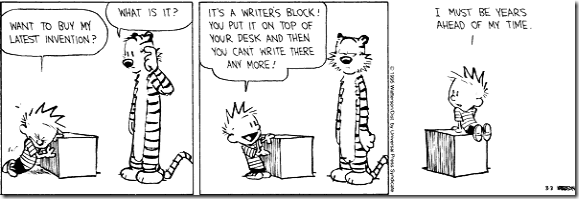
Well dear readers, I’ve hit a bit of a road block. Writer’s block, really.

It’s not a complete-and-total case of writer’s block; I have been writing every day for a while on a site called 750words.com (more on that later) and that’s been incredibly helpful, but the writing has been largely personal, I kind of blog-style journal full of ranting and writing myself in circles and generally typing myself into an “oh god oh god oh god” kind of frenzy.

I know, I know… I promise it really has been helpful! I’ve needed somewhere to let out all my crazies, to think through things without worrying about whether I was going to blogging or saving it or whatever-ing it later. And over the course of my writing streak, I’ve managed to shift my general writing trend from “negative” to “positive.” There’s only so many times I can write myself in the same fretting set of circles before I just don’t want to waste the energy typing about it anymore and manage to make myself find something else to write about.

That being said, this summer’s been rough. A lot of my creative energy has honestly just gone into trying to keep myself sane. Beating away the crazies hasn’t left much imaginative room for the stories to come. I’ve probably actually been keeping a lot of my imagination clamped down in a box, afraid of what my recently acting up depression might do with it. When my brain’s skies darken for too long, it can be a dangerous thing to let my imagination start wandering down my mind’s lesser-travelled thoroughfares. Sometimes, I have to just keep forcing it down the same, safe roads, just to make sure it makes it safely home and into bed each night.

But anyhoo. So, no, my imagination hasn’t been completely devoid of stories. Sure, it’s come up with some characters and plot lines and narrative voices here and there… but like I’ve said, they’ve been angry stories, and I haven’t actually invested myself in writing any of them down for fear that I will be pulled deeper into the hurt that’s born them and not find an escape at the end.

Sharp detour – as black as all of this is probably sounding, my summer hasn’t been *complete* shit. There’s been a lot of great stuff there too. But the thing is, even the happy moments recently haven’t been spawning any stories. I wandered around LACMA today for four hours and not a single painting whispered that it had a tale behind it. Normally I can barely step foot into an art museum without entire galleries shouting at me.

Sure, I’ve got the beginnings of at least half a dozen potential novels archived in my head. I meant to write them all, at some point or other. But the problem is, none of them have felt relevant this summer. They’ve all just felt… stale. None of their characters have shaken off their dust and taken up residence in my head, which is usually what happens whenever I’ve got a story that I really need to write. All the plots and characters I’ve got stored away have felt like just that – two-dimensional writing devices, not the living, breathing creatures that walk around and make noise in my mind all day whenever I’m really working on something.

I’m not sure where to even start on this problem. So, I thought I’d ask y’all for advice. Readers, fellow writers, what would you do? Got any home remedy writer’s block cures? What do you do when you don’t know where all the stories have gone?